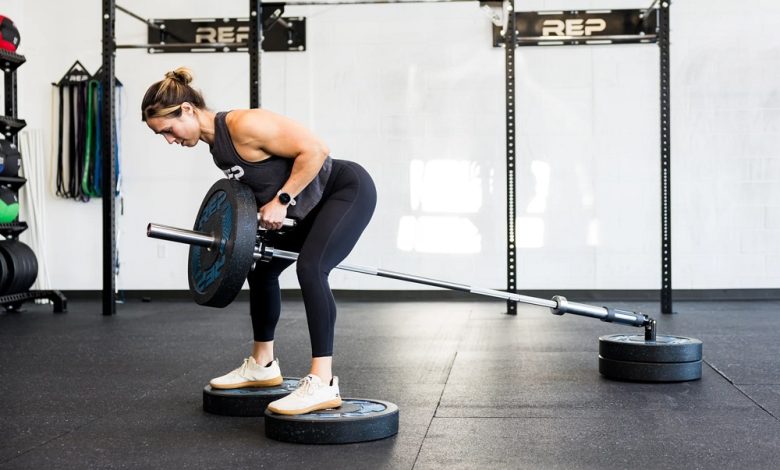
Repetitions in reserve, commonly abbreviated as RIR, estimate how many technically acceptable repetitions remain when a set ends. Used properly, it helps regulate effort without requiring every exercise to reach failure.
Applying RIR inside a gym singapore members use requires more judgement than assigning a number to every set. Machines, free weights, cables and bodyweight exercises each create different failure patterns, so the estimate must reflect the equipment and the intended technique.
Define the Repetition That Counts
RIR only works when a valid repetition has been defined. If range of motion becomes shorter, momentum increases or body position changes, the trainee may appear to have additional repetitions available that do not meet the original standard.
Before the first working set, decide what must remain consistent. This may include squat depth, a controlled lowering phase, contact with a machine backrest or a pause at a specific position.
Technical failure occurs when those conditions can no longer be maintained. It may arrive before the weight becomes physically impossible to move.
Calibrate the Scale
Many trainees initially underestimate how many repetitions remain. A set described as one RIR may actually end four or five repetitions before failure, especially when the exercise creates unfamiliar discomfort.
Calibration sets can improve accuracy. On a safe machine exercise, a trainee can occasionally continue beyond the predicted stopping point while maintaining the agreed technique, then compare the estimate with the actual result.
This should not be repeated constantly. The purpose is to develop judgement, not convert every workout into failure testing.
RIR on Selectorised Machines
Selectorised machines provide stability and make it easier to focus on the target muscles. This often makes RIR more predictable because balance and setup demands are reduced.
However, the resistance profile may become harder at a particular part of the movement. A trainee might feel capable during the first half of a repetition but repeatedly fail near the shortened or lengthened position.
Machine settings also affect performance. Seat height, backrest angle and handle position should be recorded because changing them can alter leverage enough to invalidate comparisons.
RIR With Free Weights
Free-weight exercises involve more coordination and stabilisation. A squat or bench press can end because positioning deteriorates even when the prime movers could theoretically produce more force.
For these exercises, RIR should refer to repetitions that could be completed with the same range and technique. Counting hypothetical repetitions that require altered mechanics creates a falsely optimistic estimate.
Safety also matters. Exercises where failure could trap the lifter should be performed with appropriate safeties, competent spotting or a deliberately conservative effort target.
RIR on Cable Exercises
Cable stations allow varied angles and continuous resistance, but small setup changes can influence difficulty. Moving one step farther from the stack or changing the pulley height may affect both tension and stability.
Mark or record the important setup variables. Notes such as “pulley at shoulder height, split stance, one step forward” are more useful than recording the weight alone.
Cable stacks may also differ between equipment models. A stated load should therefore be treated as a machine-specific reference rather than a universal measure of strength.
Bodyweight Exercises Need Clear Progressions
RIR can be difficult to estimate during push-ups, pull-ups and split squats because the resistance is not adjusted through a weight stack. Technique changes may silently reduce the effective load.
For push-ups, hip position, hand placement and chest depth should remain consistent. For pull-ups, swinging, shortened range and changes in grip width can make recorded repetitions difficult to compare.
When the prescribed RIR becomes easy to exceed, progress the exercise deliberately. Adding external load, increasing range or selecting a harder variation is more measurable than simply performing increasingly loose repetitions.
Different Exercises Produce Different Sensations
A set of leg extensions may create intense local burning several repetitions before failure. A heavy deadlift may feel less locally painful but produce a larger overall recovery cost.
RIR should not be inferred from discomfort alone. The estimate concerns remaining performance under the defined technique, not how unpleasant the current repetition feels.
This distinction becomes especially important during higher-repetition training. Learning to separate discomfort from actual loss of force improves effort regulation.
Use Rep Speed as Supporting Evidence
Repetitions commonly slow as a set approaches failure. A noticeable reduction in speed can support an RIR estimate, particularly when the load and exercise are familiar.
Speed is not a perfect indicator because some trainees intentionally move slowly, while certain exercises naturally slow at difficult joint angles. It should be combined with technique, exertion and previous performance rather than used alone.
Video can help when practical and permitted. Reviewing the final repetitions may reveal changes in speed or range that were difficult to notice during the set.
Programme RIR by Exercise Role
Not every exercise needs the same effort target. Major compound lifts may remain around two or three RIR for most training, especially when performed frequently.
Machine and isolation exercises can often move closer to failure because the consequences of technique breakdown are easier to control. Even then, joint comfort and weekly recovery should influence the decision.
At TFX Singapore, trainees can organise sessions so that demanding free-weight movements are completed while concentration is highest, with lower-risk machine work used later for additional volume.
Progress Within an RIR Range
Suppose a programme prescribes three sets of eight to ten repetitions at two RIR. The trainee should select a load that allows all working sets to remain reasonably close to that target.
When ten repetitions can be completed across the prescribed sets without exceeding the effort limit, a small load increase may be appropriate. Repetitions can then return toward the lower end of the range.
This method combines performance and effort. It prevents premature load increases based only on completing a target once.
Adjust for Daily Readiness
Sleep, food intake, work stress and accumulated activity can change performance. A fixed load may represent three RIR on one day and no RIR on another.
Autoregulation allows the load or repetition target to be adjusted while preserving the intended effort. This is not an excuse to avoid difficult work, but a way to keep the training stimulus consistent when readiness varies.
If performance is repeatedly below expectation, the issue is no longer a single-day adjustment. Programme volume, exercise selection and recovery habits should be reviewed.
Record Enough Detail to Compare Sessions
A useful log includes exercise, equipment identifier, setup, load, repetitions and estimated RIR. Notes should be brief enough to maintain consistently but detailed enough to reproduce the set.
When training at different locations, do not assume that matching numbers on two machines represent matching resistance. Compare performance separately until enough experience exists to understand the difference.
RIR becomes more valuable as the training history grows. Patterns reveal whether estimates are stable, whether progression is genuine and which exercises repeatedly produce inaccurate judgements.
Treat RIR as a Skill
The scale is not an objective laboratory measurement. It is a practical decision tool that becomes more reliable through consistent technique, occasional calibration and honest recording.
Used well, RIR allows hard training without uncontrolled fatigue. It creates a common language for adjusting loads, managing weekly stress and progressing across different equipment.
The goal is not to predict failure with perfect accuracy. It is to make better decisions than relying on mood, discomfort or arbitrary weight increases alone.